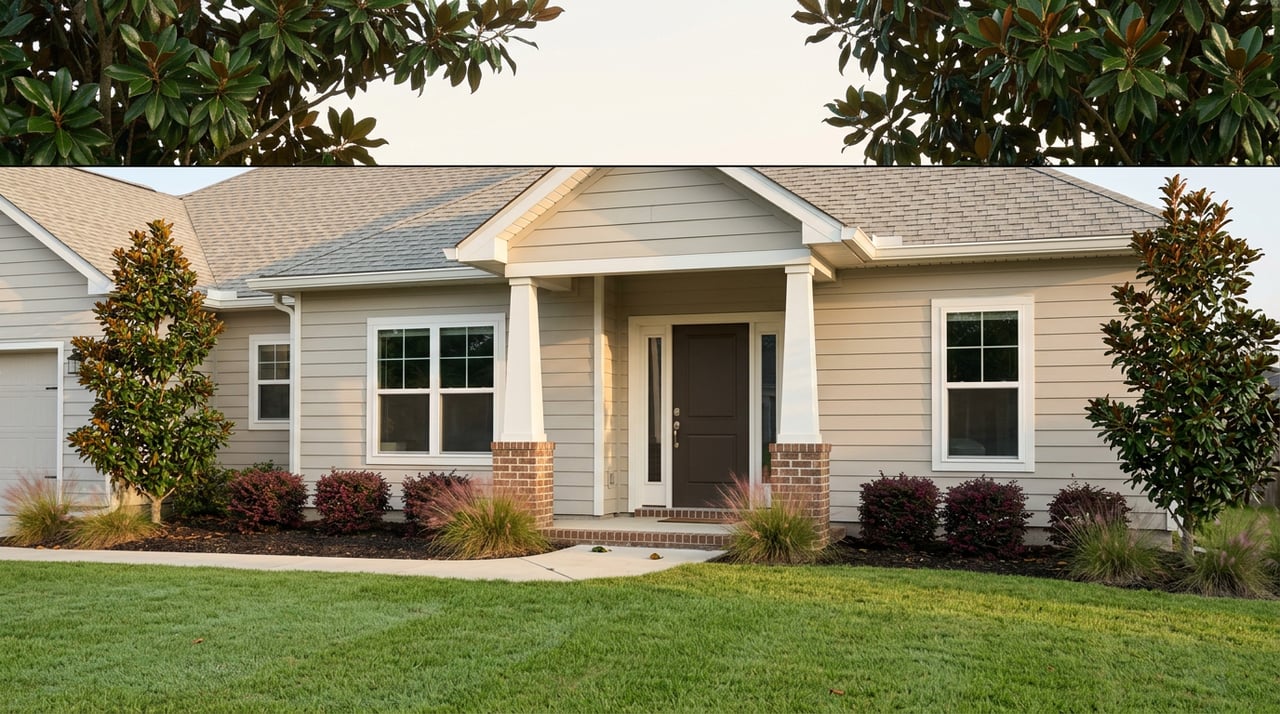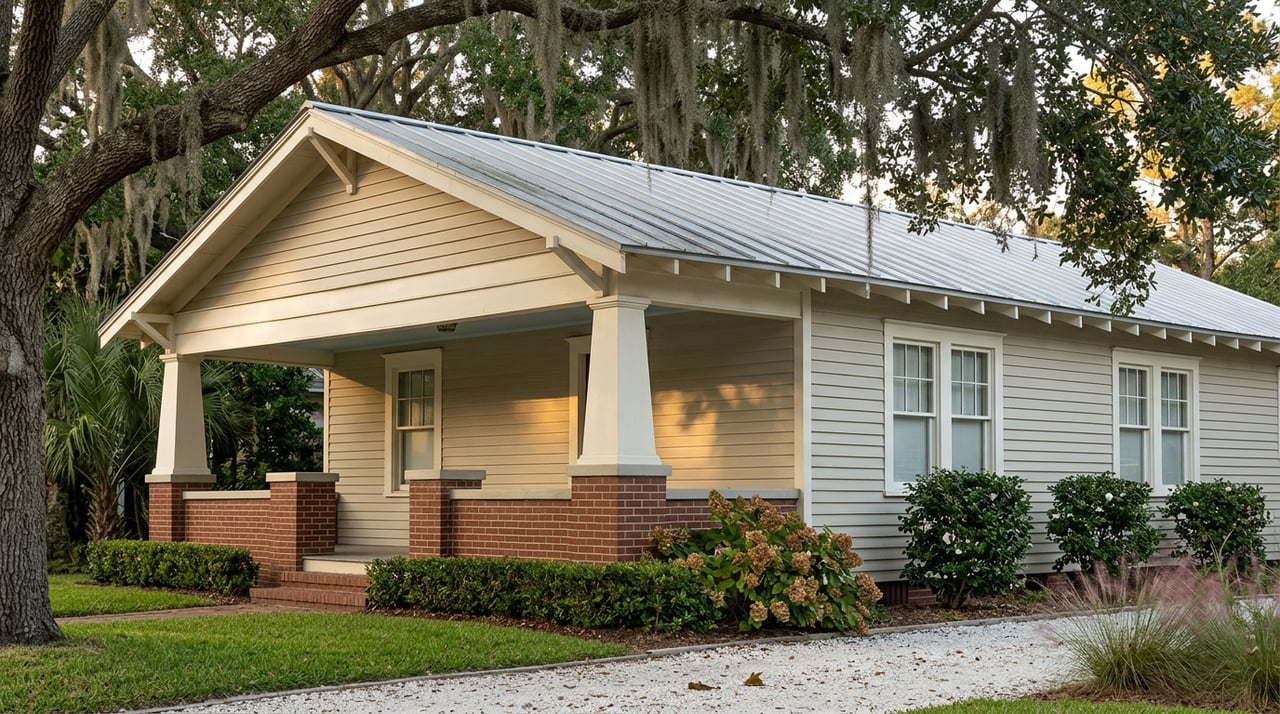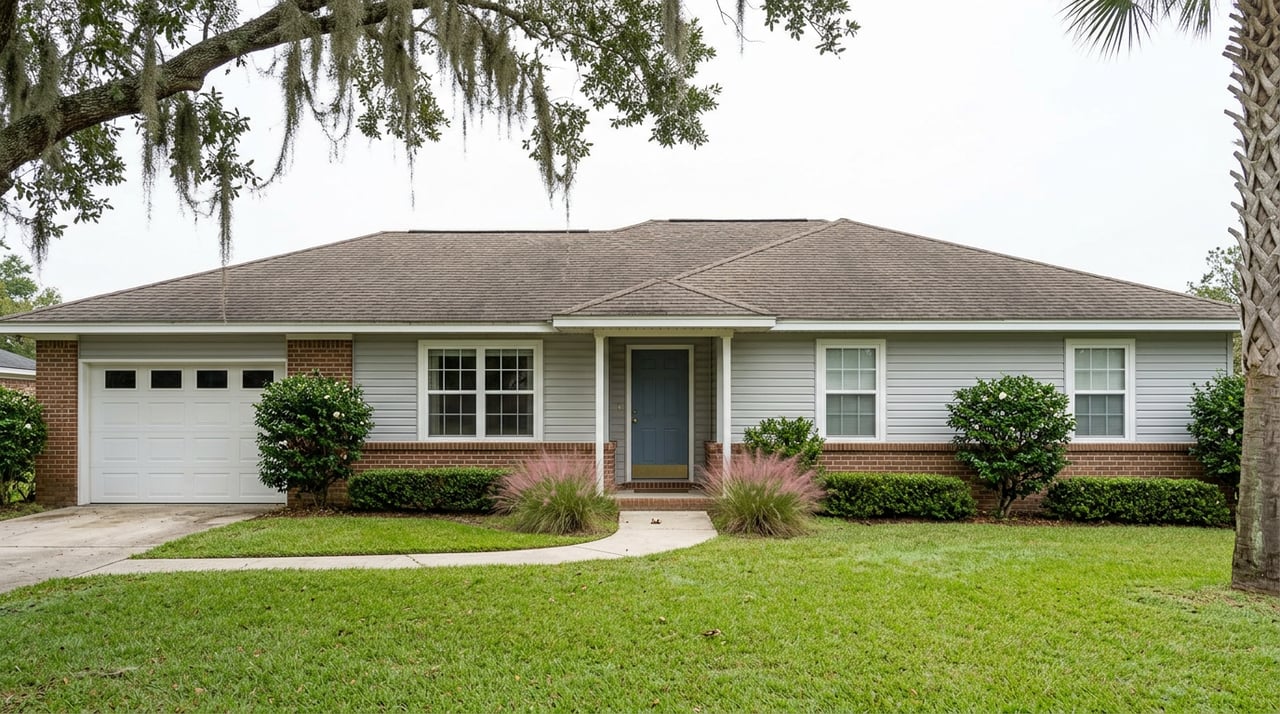
Why would two houses on the same Richmond Hill street, built the same year, worth roughly the same today, end up on completely different property tax trajectories over the next five years?
That's the question anyone comparing Richmond Hill to Savannah proper should be asking right now, and it has nothing to do with school districts or flood maps. It comes down to a ballot measure most out-of-state buyers have never heard of, a 25-year-old exemption Savannah already has, and a base-year reset that determines whose tax bill actually reflects the new math and whose doesn't.
What Changed Last November
On November 4, 2025, Bryan County voters approved a Floating Local Option Sales Tax, known as FLOST, a new penny-on-the-dollar sales tax whose entire purpose, by law, is to buy down the property tax millage rate. Statewide that day, voters approved 32 of 36 FLOST referendums on the ballot, and in Bryan and Liberty counties specifically, the measure passed by an average margin of 32 percent.
Bryan County Commission Chairman Carter Infinger framed the appeal to residents in blunt terms before the vote. According to Bryan County News, Infinger said the tax could cut Bryan County's millage rate from 5.7 mills down to as low as 2.1, and Richmond Hill's city rate from 4.1 mills to 1.5, with Pembroke's dropping from 10.0 to 3.6. His argument for why residents should feel comfortable with a new sales tax was straightforward:
"About 65 to 70 percent of those pennies [from FLOST] will be from people passing through our community."
That's a real number tied to a real vote, and it matters for anyone weighing Richmond Hill against Savannah on cost of ownership. But the timing matters just as much as the number. FLOST collections started in January 2026. The rollback doesn't show up on a tax bill until 2027. If you're comparing Richmond Hill's current millage rate to Savannah's today, you're looking at a number that's mid-transition, not the number Bryan County is actually building toward.
Why Savannah Already Solved a Version of This Problem
Here's where the comparison gets more interesting than a simple millage-rate chart. FLOST doesn't exist in a vacuum. It's the funding mechanism behind House Bill 581, the statewide floating homestead exemption Georgia voters approved in November 2024, which caps how fast a homesteaded property's taxable value can grow, tying it to the inflation rate instead of the open market.
Chatham County looked at that statewide bill and opted out. Not because Savannah rejected the concept, but because it didn't need it. Chatham has had its own version, the Stephens-Day exemption, since 1999. In public hearing materials, the City of Savannah described HB 581 as a statewide exemption that mirrors Chatham County's own 1999 exemption, and noted that tracking a second, largely redundant exemption would mean added administrative work for a benefit residents already had. The City of Pooler, sitting inside Chatham County, made the same call for the same reason, telling residents in its own public notice that nearly all Chatham County homeowners with the Stephens-Day exemption would keep that protection whether or not the city opted into HB 581.
So the honest version of the comparison isn't "Richmond Hill now has a tax cap and Savannah doesn't." It's that Savannah residents have had a value-growth cap baked into their tax bills for a quarter century, while Bryan County residents are just now building the funding mechanism to get something similar, five years at a time, starting from a 2026 collection year that won't show results until 2027.
The Part That Actually Affects a Buyer
This is where most explanations of HB 581 stop short, and it's the piece that matters most if you're the one signing a purchase agreement rather than the one who's owned the house since before 2024.
The floating exemption works by freezing a homesteaded property's taxable value at a base year, then letting that base rise only by the inflation rate each year, even if the market value climbs faster. But the base year resets the moment a property sells. A new owner doesn't inherit the seller's frozen value. Their base year becomes the property's fair market value as of their own purchase.
Picture two identical houses on the same Richmond Hill street. One owner bought in 2023 and has held the homestead exemption since. Say the home was worth $350,000 that year. Under HB 581, that owner's taxable value can only climb by the inflation rate going forward, even as the house's actual market value rises toward $400,000 or beyond. The gap between what the house is worth and what it's taxed on becomes the owner's exemption, and it grows every year they stay.
The house next door sells today for $410,000. The new owner's base year is 2026, at the current market price. They get the same protection against future increases, starting from that day forward, but they get none of the five years of inflation-only growth their neighbor already banked. Two nearly identical homes, two very different tax pictures, and the only variable is when each owner closed.
That's the mechanism buyers actually need to understand before they lean on "Richmond Hill has lower taxes" as a reason to move. The millage rollback FLOST is funding will eventually lower everyone's rate. But the exemption that determines your actual taxable value rewards tenure, not location. A buyer closing in 2026 gets the benefit of a lower millage rate once it lands in 2027, applied to a taxable value that starts at full current market price. The years of compounding advantage go to whoever was already sitting on the exemption.
Reading the Comparison With Current Numbers
None of this means Richmond Hill is a weaker buy than Savannah. The city's housing market has stayed steady through the transition. Over the three months ending May 2026, the median sale price in Richmond Hill was $402,000, up 1.3 percent from the same period a year earlier, with homes typically selling in 57 days, according to Redfin's June 2026 market data.
What it means is that the tax-rate comparison a buyer sees on a listing sheet or hears secondhand isn't the full story on either side of the county line. Chatham's homeowners have had a value-growth cap running since 1999. Bryan County's is brand new and still ramping up, funded by a sales tax that started collecting in January 2026 and won't show up as a line-item reduction until the 2027 statement. A buyer weighing the two counties should treat today's posted millage rates as a snapshot mid-transition, and treat the exemption itself as something that rewards the length of ownership more than the zip code.
A Few Questions Worth Asking Before You Compare Numbers
Does the FLOST rollback mean Richmond Hill's rate is guaranteed to drop to 1.5 mills? Infinger's figures were the county's own projection tied to the referendum campaign, not a locked-in outcome. Millage rates are still set annually by each governing body, and the actual reduction will depend on how much sales tax revenue FLOST generates once fully underway.
Should I wait until 2027 to buy in Richmond Hill? The rollback applies to the millage rate everyone pays, not to a discount reserved for early buyers. Waiting doesn't change your base year advantage. What it changes is which tax bill you're comparing against when you run the numbers, since 2026 bills won't reflect the reduction and 2027 bills will.
Does Savannah get anything new out of this? Not from FLOST specifically, since Chatham didn't adopt it and already has Stephens-Day. Chatham County voters did back a separate measure in November 2025 that caps annual assessment increases for school property taxes at the inflation rate, a related but distinct mechanism from the homestead exemption itself.
If you're weighing a purchase in Richmond Hill against something in Savannah's historic district or one of the coastal islands, the tax line on a comparison sheet deserves a longer look than a single millage number. Oliver Group works both sides of that comparison daily, from Bryan County's newer construction to Chatham's historic stock, and can walk through what a specific property's tax trajectory actually looks like once the base year and the millage timeline are accounted for. Reach out for a home valuation and a clearer read on what you'd actually be signing up to pay.