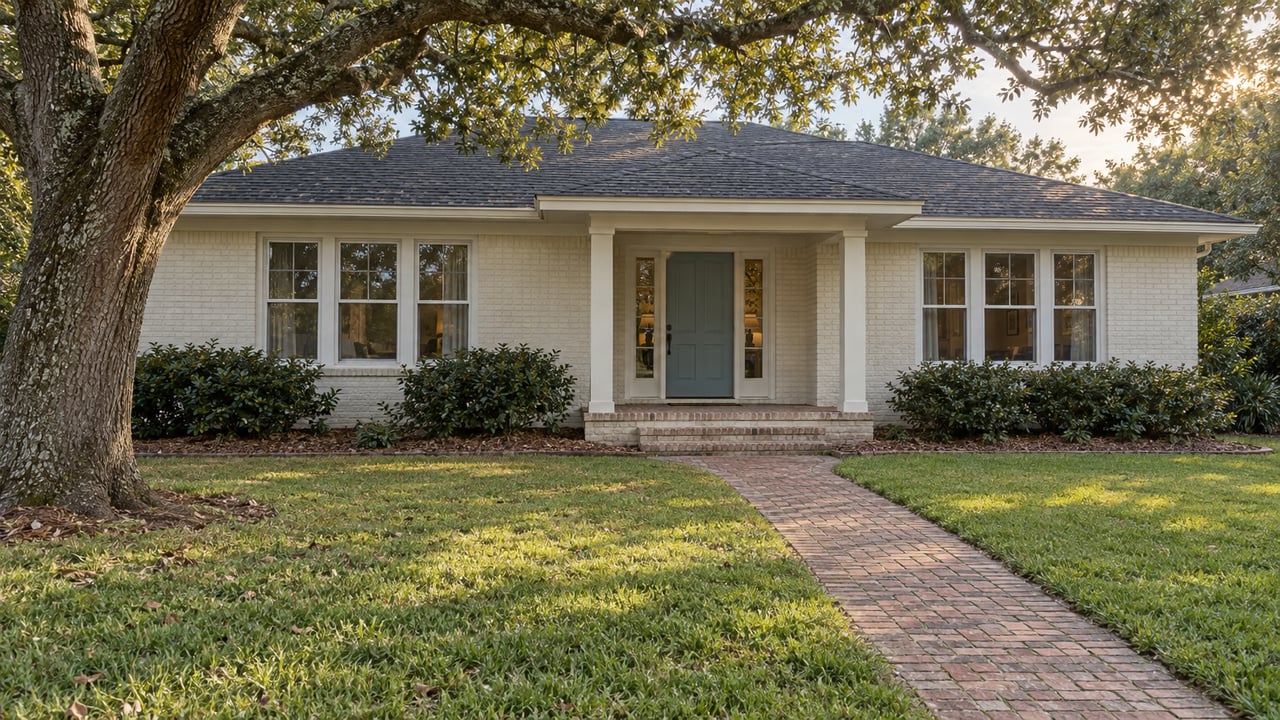
Picture two houses on the same Isle of Hope street, with the same fair market value and the same 2026 millage rates. One owner applied for a homestead exemption decades ago. The other house sold last year. Under Chatham County's rules, those two owners can get very different tax bills. The gap comes from the year each owner's exemption started counting from.
Every Isle of Hope listing carries a tax figure, and that figure belongs to the person selling. Chatham's homestead exemptions measure value from a base year tied to the owner. When the deed changes, the base year changes with it.
What Changes When the Deed Changes
The Chatham County Tax Commissioner's 2026 property brochure, revised August 14, 2026, says an exemption renews automatically every year as long as the owner keeps living in the home. It also says a new application is required when a taxpayer "bought and occupies a new home" or "had any type of deed change." When an Isle of Hope home sells, two base years start over, and a newer state rule decides what the purchase price can and can't do:
- The county base year starts over. The Board of Assessors defines the Stephens-Day exemption as the difference between current fair market value and an adjusted base-year value. That base is the property's value in the year before the homestead application, plus any improvements since. A seller who applied long ago is taxed from an old base. A buyer's base comes from the year before the buyer applies.
- The new school exemption starts over too. Chatham voters approved HB 782 in 2025, with 79% voting yes, WTOC reported. The bill sets the base year as the taxable year before the exemption is first granted to the home's "most recent owner." It applies to school taxes for educational purposes starting with tax years that begin on or after January 1, 2026.
- The purchase price is not a ceiling. This rule isn't reset by a sale; it applies to every sale. The Board of Assessors' FAQ answers this question directly: under HB 581 and HB 92, "the sale price is no longer the maximum allowed value for the following tax year." A home can be assessed above what the buyer paid.
Taken together, a long-time owner's low bill doesn't transfer with the house, and the buyer's price doesn't set a ceiling either.
The County Line Is Where Ownership Tenure Shows Most
The three main lines on an Isle of Hope bill don't all follow the same freeze rules. The county's homestead application says Stephens-Day "will offset any future increase in property value for the county portion of your bill, but does not affect school, city, or state taxes."
The Board of Assessors adds that the school levy carries a Consumer Price Index adjustment added to the base year value, and that CPI is also applied to City of Savannah bills. The definition lists no CPI step for the county portion. On paper, then, the county line follows the original base year, adjusted only for improvements. The longer a seller has owned the home, the further that base sits from today's value.
Georgia's newer statewide exemption sits on top of this. HB 581 created a floating homestead exemption that limits annual assessment increases to inflation, and each taxing body could opt out during an initial window. Chatham County scheduled public hearings on its intent to opt out in February 2025. Commissioners then took no action, which kept HB 581 for county taxes, the Savannah Morning News reported on February 21, 2025. The Savannah-Chatham County Public School System announced plans to opt out, pointing to the existing Stephens-Day exemption, WTOC reported. When both exemptions could apply, the county's brochure says "whichever offers the greatest savings is awarded to the taxpayer."
Why the City's Opt-Out Stops at the Causeway
Buyers comparing Isle of Hope with a house inside Savannah may have read that the city opted out of HB 581. Savannah City Council voted unanimously to opt out for municipal taxes, WSAV reported in February 2025. That vote doesn't reach an Isle of Hope bill. Isle of Hope is unincorporated, and WTOC's reporting on the county's unincorporated-area tax increase named "Isle of Hope" among the areas it covered.
The Tax Commissioner's millage table shows which rates apply where for tax year 2026:
| Levy, tax year 2026 | Mills | On an Isle of Hope bill? | Base-year rule after a sale |
|---|---|---|---|
| Chatham County M&O | 10.518 | Yes | Stephens-Day base resets to the buyer; HB 581 retained |
| Special Service District | 6.502 | Yes, unincorporated area | Rate applies to every parcel in the district |
| School | 17.331 | Yes | CPI-adjusted base; HB 782 base resets to the most recent owner |
| City of Savannah | 11.749 | No | Not levied in unincorporated Chatham |
None of these rates are why a buyer's bill differs from the seller's. The county general rate stayed at 10.518 mills when commissioners adopted it at the end of July 2026, WJCL reported. The school board kept 17.331 mills on a 6–3 vote, according to WTOC. A mill is $1 of tax per $1,000 of taxable value, so every owner faces the same rate. The difference is the taxable value each owner's exemptions leave behind.
The One Line That Moved, and the Fire Department It Didn't Replace
The Special Service District rate is the only one on the table that recently changed. It was 4.502 mills from 2022 through 2024 and 6.502 in 2025 and 2026. In a county news release, Chatham explained that it raised the unincorporated rate by 2 mills after creating the Chatham County Fire Department. The county described the change as "a 48.99% increase in property taxes levied" in the SSD fund, a measure of total dollars collected rather than the rate itself. Fire service moved off the old Fire Fee, which had been billed on burnable square footage, and into the regular property tax bill. The county said the change would lower total costs for about 82% of unincorporated residents.
Isle of Hope already had its own fire service. The Isle of Hope Volunteer Fire Department has operated since 1948. After the county moved to fold it into the county system, commissioners voted unanimously on March 13, 2026, for a compromise contract that keeps the department independent and in control of daily operations. Under the contract, the county manages its finances and pays about $32,000 a month, with automatic annual renewal, WTOC reported. For a buyer, the SSD line pays for an arrangement that is now settled. It's the same rate for every parcel in the district, so the base-year resets still drive the gap between a seller's bill and a buyer's.
Isle of Hope Is on the 2026 Review List
Assessed value is the other half of the bill, and the Board of Assessors is reviewing this area. Its Tax Year 2026 field review list includes "ISLE OF HOPE CENTER" and "ISLE OF HOPE WATER" among its residential neighborhoods. The board lists its reasons for property visits, including permits, revaluations, "review of sales," audits and appeals.
Recent Isle of Hope sales are part of what the assessors study. Under the base-year rules above, a long-time owner is shielded from much of a rising fair market value on the county line. A new owner's exemption starts from a far more recent value.
How Timing Fits In
The brochure says a homestead owner must "own, occupy, and claim the property as their legal residence on January 1" of the tax year. Applications must arrive within 45 days of the Annual Notice of Assessment date to count for that year. Both the Stephens-Day and HB 782 definitions tie the base year to when a new owner first applies or is first granted the exemption. That means a closing date near the January 1 cutoff is worth confirming with the Board of Assessors before a buyer counts on a particular tax year.
Two more details from the Board of Assessors are useful for anyone looking at a specific house:
- Value History. At chathamtax.org, the "Property Records Search" brings up a parcel's record, and its "Value History" tab shows how the assessment has moved. An entry reading "APPEAL DECISION" for 2026 means a 299C freeze is in place.
- Appeals and the 299C freeze. The board warns that appealing while a 299C freeze is active "may result in the removal" of that protection.
This post is general information about published county and state rules, not legal, tax or financial advice. Please confirm your own figures with the Chatham County Board of Assessors, the Tax Commissioner or your tax professional.
FAQ
Does the regular homestead exemption also reset? The brochure says any deed change requires a new application. The regular exemption takes $12,000 off assessed value for county taxes and $2,000 off for school and state taxes.
Could the City of Savannah or the school district switch back to HB 581? HB 92, effective April 1, 2025, lets a jurisdiction that opted out rescind its opt-out. For 2026 through 2029, the rescission has to be filed by March 1 of the year it takes effect. The bill's page on the Georgia General Assembly site has the full text.
Does refinancing reset the exemption? The brochure says homestead exemptions should not be affected by refinancing "unless the name is changed on the deed."
If you're selling a home you've held for years, buyers will look at your tax figure and wonder what theirs will be. A clear answer, backed by county records, helps your pricing hold up. Oliver Group prepares Isle of Hope listings with that question answered ahead of time. Get a Home Valuation, and we'll go through your parcel's numbers with you.