The median sale price in Bloomingdale slipped roughly 4% over the past year, landing around $359,900. Days on market climbed from 76 to 85. On any portal dashboard, that reads like a neighborhood losing altitude — and most buyers comparing submarkets across the Savannah metro move on to Pooler or Wilmington Island without looking deeper.
That's a mistake. The softness is real, but the cause is not what most buyers think it is. And the buyers who understand the difference have a window that won't stay open.
The Median Is Being Pulled Down by Supply, Not Demand
When a market weakens because buyers pull back, you see prices fall and volume fall together. That is not what is happening in Bloomingdale.
In January 2026, 196 homes sold in the Bloomingdale market compared to 135 in January 2025. That is a 45% year-over-year jump in transaction volume. Demand is not retreating. Inventory is expanding, and the inventory entering the market is systematically priced below the existing resale stock.
The New Hampstead Planned Unit Development is the mechanism. Permitted for up to 10,000 dwelling units at full buildout, New Hampstead is releasing lots in phases to national builders simultaneously. D.R. Horton's Pines at New Hampstead, Lennar's Edgewater at New Hampstead, K. Hovnanian's Oakwood and Aspire — all are actively selling now. New construction entry points range from $302,000 to $386,000. When homes priced at $302,000 begin closing at volume, they pull the area median down arithmetically, regardless of what is happening to resale values at higher price points.
| What the number shows | What is actually driving it |
|---|---|
| Median price down ~4% | New-construction phase releases priced 10–15% below resale comps entering the sales record |
| Days on market up from 76 to 85 | Larger inventory pool means buyers have options; not the same as weak absorption |
| Volume up 45% YoY | Demand is absorbing a larger supply wave — characteristic of a market in expansion, not contraction |
A falling median produced by supply expansion in a rising-demand market is not a red flag. It is an entry point.
The Employment Ramp That Has Not Peaked
Price appreciation in residential real estate follows employment. The Bloomingdale thesis depends on understanding exactly where the Hyundai Motor Group Metaplant America employment ramp sits today, because that number is still moving upward.
The Hyundai Metaplant in Ellabell, roughly 20 miles southwest of Bloomingdale, is the largest economic development project in Georgia history. As of October 2025, approximately 3,200 workers were employed at the facility. The company's stated target is 8,100 jobs by 2031, with plans to expand annual production capacity to 500,000 vehicles. That is roughly 5,000 jobs still to be added over the next five years.
The plant itself is one part of the picture. Seventeen suppliers have already announced factories to support the Metaplant. One of them, Seoyon E-Hwa, built a $76 million, 406,000-square-foot facility in Bloomingdale specifically. That supplier investment is already in the ground. More is coming.
The part of the ecosystem that most directly affects 2026 demand: the HL-GA Battery Company, a joint venture between Hyundai Motor Group and LG Energy Solution, is a $4.3 billion battery manufacturing facility at the same Bryan County site. Production was expected to begin in the first half of 2026 after a delay from a 2025 immigration enforcement action at the site. When battery plant operations reach steady state, they add another substantial employment layer to the same workforce that commutes through Bloomingdale's I-16 and Jimmy Deloach Parkway corridor.
None of that hiring is reflected in January 2026 median prices. The employment curve is still in its early third.
What the $50K Gap to Pooler Actually Buys
Bloomingdale's average home value runs approximately $50,000 below the Pooler and Savannah averages. That gap is the most straightforward statement of the opportunity, but it requires one clarifying note: the gap is not explained by inferior product.
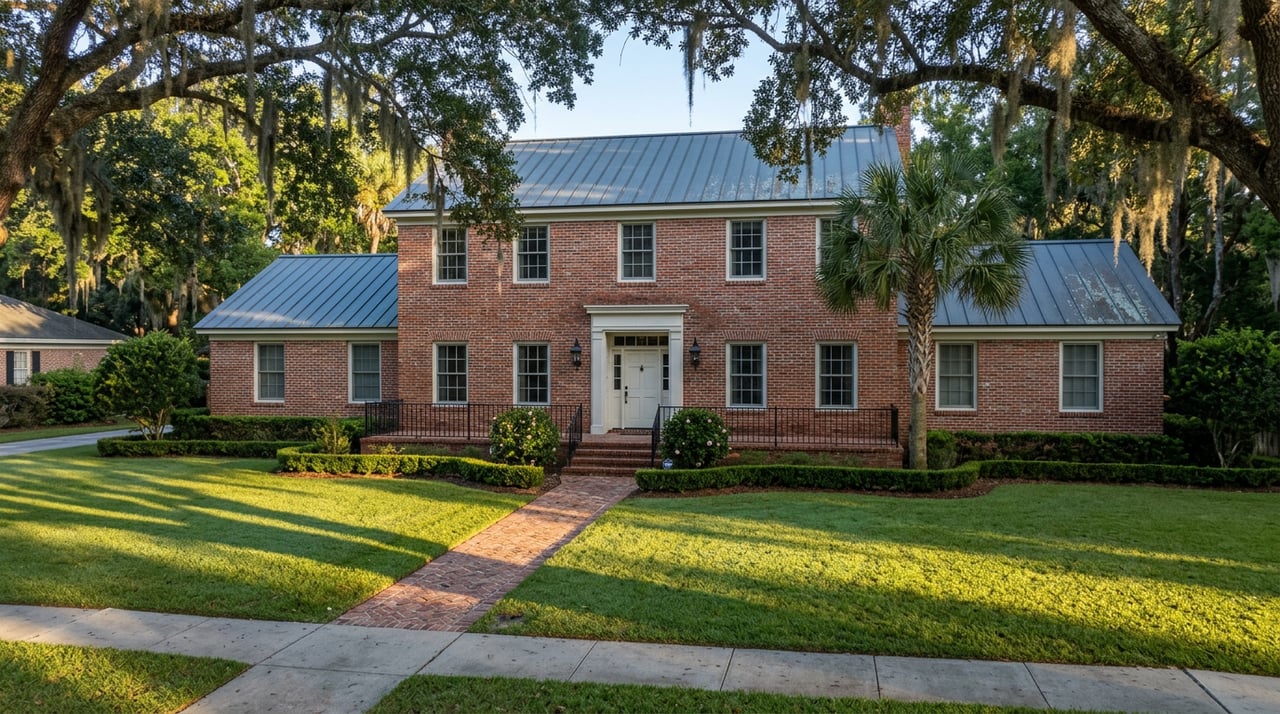
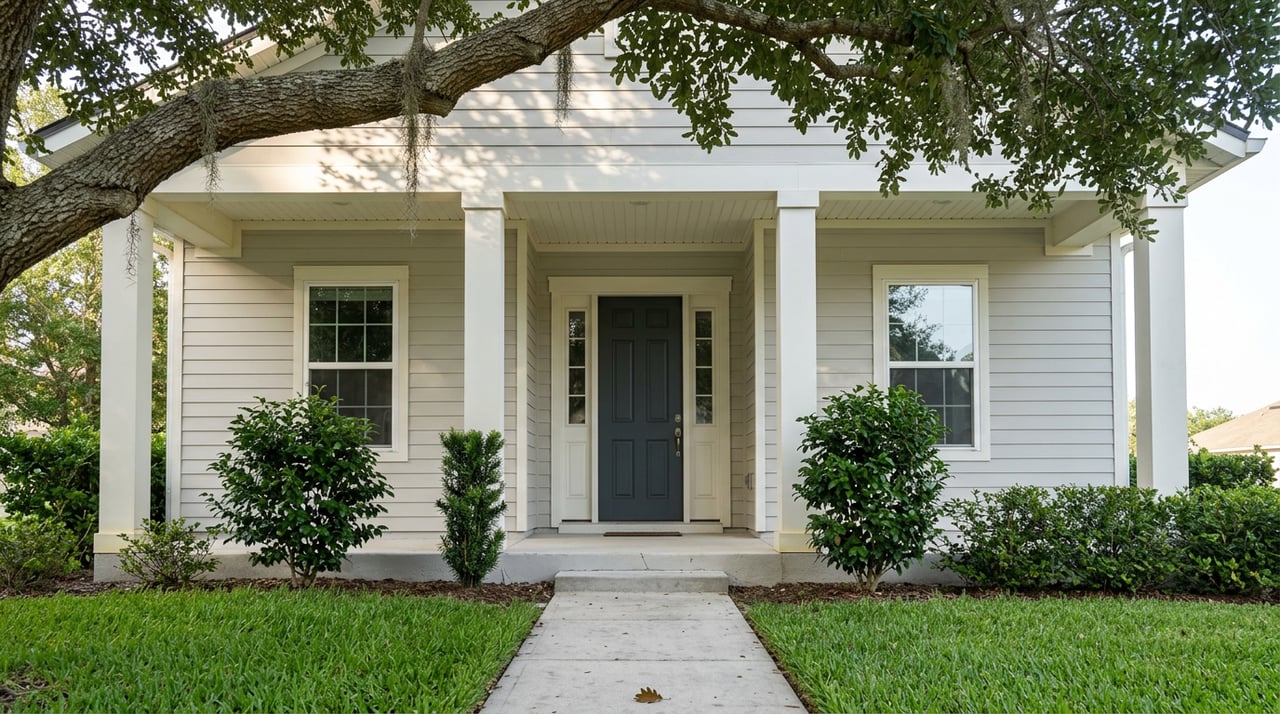
New Hampstead homes from D.R. Horton and K. Hovnanian include open-concept floor plans, stainless appliances, and attached two-car garages on lots with access to community pools, walking trails, scenic ponds, and planned village-center retail. Lennar's Edgewater community lists homes priced roughly 10% below the broader area average of $363,500 by the builder's own marketing disclosure.
The $50,000 gap is a timing discount. Bloomingdale sits at the convergence of I-95 and I-16, between Pooler to the north and the Hyundai corridor to the west. As supplier employment in the corridor matures and the New Hampstead Village Center retail buildout progresses, the friction that produces that gap — lower name recognition, a thinner commercial layer, fewer established dining options within the community — compresses. It does not disappear overnight, but it compresses.
For buyers who need to compare submarkets, the question is not whether Bloomingdale matches Pooler today. The question is what both markets look like when the employment ramp hits its midpoint in 2028 and whether the $50,000 entry advantage still exists then.
The research suggests it will not.
Frequently Asked Questions
Is all of Bloomingdale part of the New Hampstead development? No. Bloomingdale has an established residential core with ranch-style homes, cottages, and bungalows on spacious lots along Highway 80. New Hampstead is a master-planned development on Bloomingdale's south and west sides, distinct from the older residential fabric. Buyers looking for acreage, established streetscapes, or Ogeechee River frontage are shopping a different inventory than the new-construction communities.
How far is Bloomingdale from the Hyundai plant? The Hyundai Metaplant is in Ellabell, Bryan County — roughly 20 miles southwest via I-16. Several Tier 1 supplier plants, including the Seoyon E-Hwa facility, are in or immediately adjacent to Bloomingdale itself.
Does the rising days-on-market signal a risk of prices declining further? Rising DOM in a market absorbing a large new-construction release is a different signal than rising DOM in a market with stagnant demand. The 45% year-over-year sales volume increase as of January 2026 argues that absorption is healthy. The longer DOM reflects buyer options within a larger pool, not reluctance to transact.
If you are comparing Bloomingdale against other Savannah-area submarkets and want a read on what the current inventory actually supports at different price points, Nicholas Oliver works this corridor closely. Reach out for a current valuation or a side-by-side breakdown of what your budget buys across the market right now.