The headline number on Isle of Hope looks like a soft market. The median sale price over the past twelve months sits around $681,500, down roughly 6% from the year before. If you stop there, the neighborhood reads as retreating.
Look at how fast those homes are actually selling, and the story inverts.
Over the same period, Isle of Hope homes have been going under contract in 33 to 43 days. The Savannah metro as a whole averaged 78 to 108 days on market through spring 2026. The national average runs around 50 to 55 days. A neighborhood where the median is falling but homes move at twice the metro pace is not a soft market. It's a stratified one — and understanding that stratification is the clearest edge a buyer can have going in.
The Number That Should Get More Attention
Days on market is a cleaner signal of demand than median price, because it captures what buyers are willing to do right now. Price is backward-looking; velocity is real-time.
| Market | Median Sale Price | Avg. Days on Market |
|---|---|---|
| Isle of Hope | ~$681,500 (last 12 months) | 33–43 days |
| Savannah metro | ~$350,000 (Q1 2026) | 78–108 days |
| National average | varies | ~50–55 days |
A buyer comparing these numbers should be asking: if Isle of Hope demand were actually weakening, why are properties moving faster there than anywhere else in the Savannah market? The answer is not that the neighborhood has become more affordable. The answer is in the inventory structure.
A $5 Million House Across from a $300,000 House
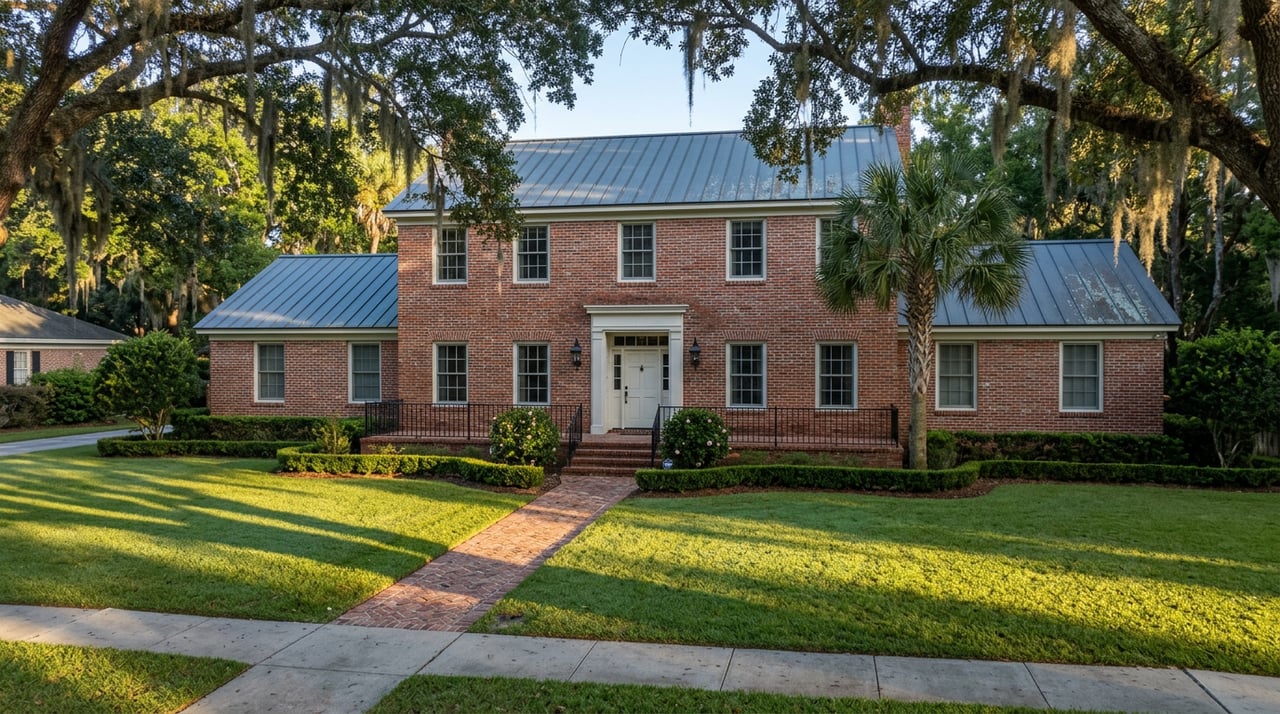
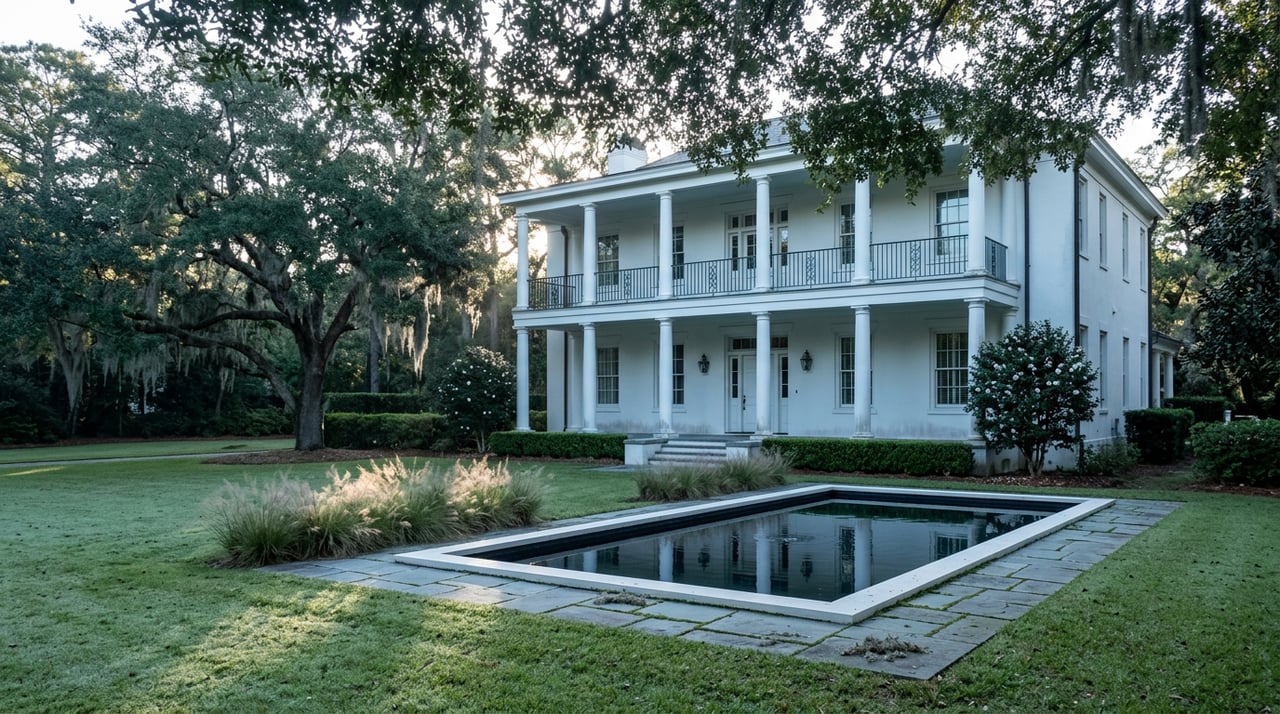
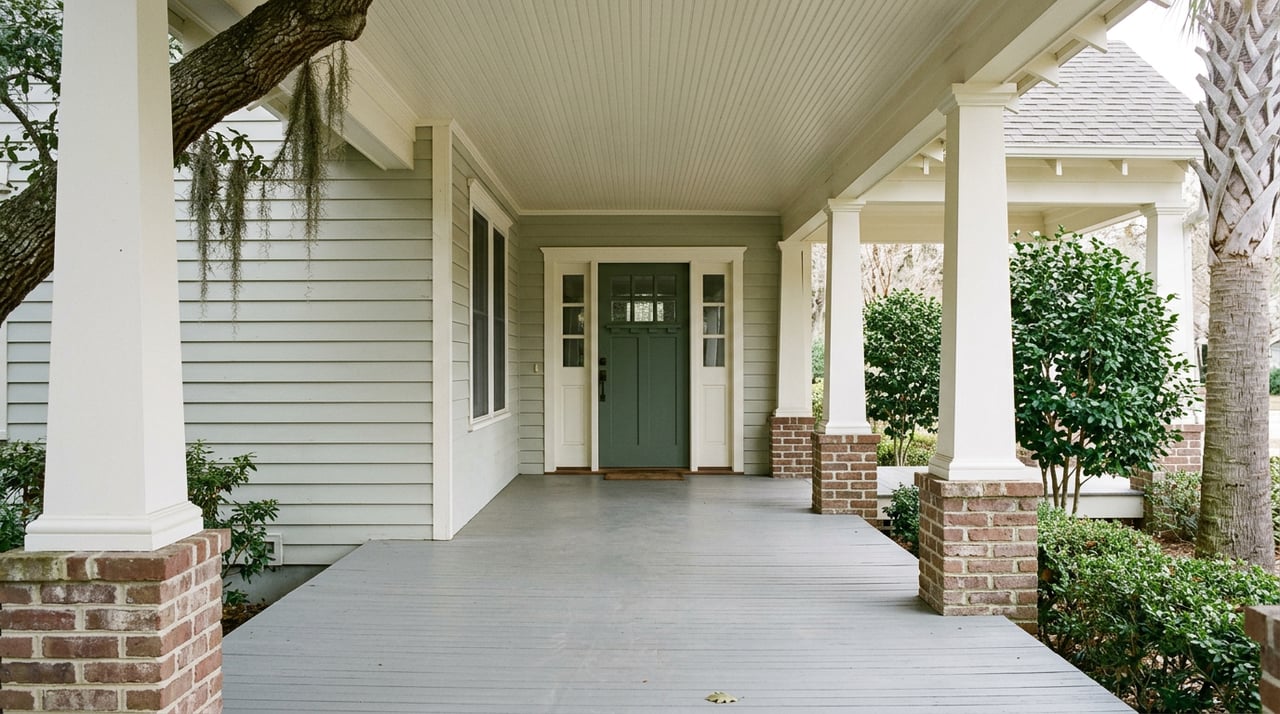
Isle of Hope is one of the few Savannah neighborhoods where that price range exists on the same block. Midcentury ranch-style homes and Craftsman bungalows typically trade in the mid-$400,000s to the low $700,000s. Larger Colonial Revivals and two-story Cape Cods reach up to $3.5 million. Homes along Bluff Drive's Historic District — the mile-long waterfront stretch that defines the neighborhood's visual identity — sit at the ceiling of that range and rarely come to market at all.
When Bluff Drive properties are not available (which is most of the time), the homes actively trading are concentrated at the mid-tier. That pulls the median down. The 6% decline does not reflect buyers bidding less aggressively for Isle of Hope. It reflects which homes were available to sell. The underlying demand for the address has not softened — the supply of trophy properties has stayed constrained, as it almost always does.
This is the mechanism that the median obscures. A declining number can mean two completely different things: buyers are paying less for the same homes, or the mix of homes selling has shifted toward a lower tier. In Isle of Hope right now, the evidence points clearly to the second.
What a Mid-Tier Address Actually Gets You
The feature that makes this stratification matter for buyers is that the infrastructure of life on Isle of Hope is not reserved for Bluff Drive. A ranch on a side street and an estate on the waterfront use the same marina, walk the same road, and eat at the same cluster of restaurants in Sandfly.
Specifically, any Isle of Hope address puts you within walking or golf-cart distance of:
- Isle of Hope Marina — 4,000 feet of new concrete docks, including 600 feet of deep-water face docks capable of accommodating large vessels, with shore power, pump-out, and Wi-Fi at every slip
- Wymberley Yacht Club community deepwater dock — available to residents of the Wymberley neighborhood as a shared amenity, no private dock required
- Bluff Drive — a mile-long waterfront road that functions as the neighborhood's social spine; residents walk, bike, and golf-cart it daily regardless of where their property sits
- Sandfly — the small commercial district immediately adjacent, anchored by Driftaway Café and The 5 Spot, which brought the popular Midtown Savannah restaurant to the Southside
- Wormsloe Historic Site and Skidaway Island State Park — both within a few minutes of the neighborhood
The access argument matters because it directly answers the comparison question most buyers at this tier are running: is it worth paying the Isle of Hope premium over a Southside subdivision with more square footage? The answer depends on whether you value what that premium buys. If Bluff Drive sunsets and a deep-water marina slip are part of your actual week, the premium holds. If they are not, Isle of Hope is probably not your neighborhood. But if they are, the current market is offering entry at a relative discount to where this neighborhood has traded historically.
Why the Top Tier Barely Moves
The homes along the Bluff Drive Historic District are among the oldest residential properties in the Savannah area, with some dating to the antebellum period. Owners of these properties hold them. When they do sell, they sell quietly and slowly. That illiquidity is not a weakness in the market; it is a structural feature that caps supply at the top end and keeps the neighborhood's ceiling visible even when it's not actively trading.
For a buyer watching Isle of Hope, the implication is that the trophy inventory is not going to flood the market and reset comps downward. The scarcity at the top is durable. What is available right now — the mid-tier ranches and bungalows — is trading at prices that reflect the broader Savannah softening even though the neighborhood's velocity suggests local demand has not followed that softening.
The Comparison That Actually Matters
Buyers typically arrive at Isle of Hope after looking at Wilmington Island, Skidaway Island, and in some cases the Southside. Each comparison has a legitimate answer.
Wilmington Island offers more inventory and, on average, lower price points, but the marina access is different in character: more residential launch ramps, less full-service deep-water infrastructure. Skidaway Island has The Landings' club amenities and more new construction, but the price floor is meaningfully higher and the community is gated rather than open. The Southside trades waterfront proximity for more house at a lower per-square-foot figure.
Isle of Hope's specific value is the combination of a walkable historic identity, open-water marina access within golf-cart range, and a functioning small-town commercial node in Sandfly — at a price tier that is, right now, softer than the neighborhood's velocity would suggest it should be.
Frequently Asked Questions
Does the 6% price decline mean values are still falling? Not necessarily. The 6% figure reflects what traded over the past twelve months, which was weighted toward the mid-tier inventory. Bluff Drive estate properties rarely transact, so they don't pull the median up in quiet periods. The 33-to-43-day average days on market is a more current read on demand, and it signals that buyers are still acting quickly when good mid-tier inventory appears.
Can you access the marina without a waterfront lot? Yes. Isle of Hope Marina is a full-service public marina on Bluff Drive, open to slip renters and transient boaters regardless of where you live on the island. Residents of the Wymberley neighborhood also have access to the Wymberley Yacht Club community deepwater dock as a shared amenity.
How far out is Isle of Hope from downtown Savannah? About 8 to 10 miles via Skidaway Road and the Harry S. Truman Parkway — roughly a 20-minute drive under normal traffic conditions. Hilton Head Island is under 45 miles.
If you are comparing neighborhoods and want a ground-level read on what Isle of Hope homes are actually trading for right now — not the portal median, but the specific comps in each price tier — Nicholas Oliver covers this market closely and can walk you through what the numbers mean for your specific situation. Reach out for a no-pressure conversation.