In 1961, a film crew set up on the main pier at Isle of Hope Marina and shot the scene where Robert Mitchum and Gregory Peck first come to blows in Cape Fear. Two local teenagers, Malcolm Harbison and Jim Sickel, landed bit parts in the picture, and for one summer the whole island turned out to watch strangers with cameras work on the dock everyone already knew.
That pier is still there. So is the crowd, more or less, just rearranged: kids crabbing off the causeway at the end of Central Avenue, paddleboarders sliding past the fuel dock, a family walking a golden retriever down Bluff Drive at the hour when the light turns the water the color of tea. What's changed is who owns the place, and what hasn't changed is what the owners do with it. That's the part worth understanding if you live here, because it isn't an accident.
The Deal Nobody Wrote Down
The marina didn't start as anyone's amenity plan. It started in the 1920s as Hallman's Fish Camp, one of a handful of competing boat rental pavilions on the Bluff where Savannahians would ride the streetcar out on weekends to rent a bateau and spend the day crabbing and fishing. Around 1939, Bill Brady, brother-in-law of a neighboring pavilion owner, bought the camp and renamed it Brady's Boat Works. It grew into a real stopover for Snowbird boats migrating between Florida and New England, and by most accounts it became the unofficial center of the island. Kids who grew up on Isle of Hope worked their first job there.
Then, sometime in the mid-1980s, real estate investors saw the same waterfront and had a different idea: buy the marina and the houses across Bluff Drive, close the operation down, and build condominiums. The plan didn't survive contact with the neighborhood. Residents pushed back hard enough that a local buyer, David Johnson, stepped in to purchase the marina operations outright, while the Isle of Hope Historical Association bought up the threatened residential parcels on the Bluff and resold them to individuals who agreed to rehab the existing homes or build in keeping with the street. The island got its marina back, and it got a set of informal ground rules for what the Bluff was allowed to become.
That's the part of the story most people who live here now have never heard, because it happened before a lot of current residents arrived and it isn't the kind of thing that ends up on a real estate listing. But it's the reason the marina you drive past today looks like a marina and not a row of condo balconies.
Two Sales, One Understanding
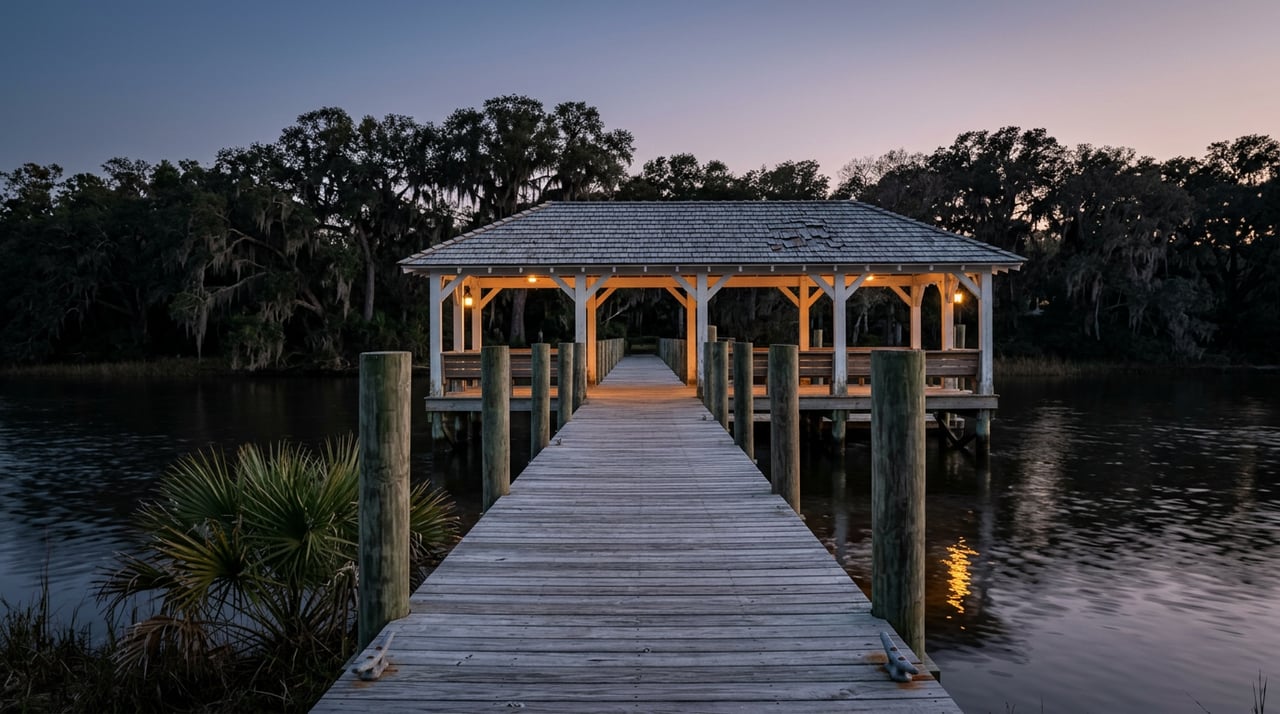
In 1997, Charlie Waller bought the marina from David Johnson Jr. and spent the next quarter century investing in it, more than $2 million into concrete floating docks, an overwater pavilion, and a clubhouse, according to the marina's own account of the sale. Under his ownership the property became what it is physically today: roughly 4,000 feet of concrete dock space, including 600 feet of deep water face dock built to handle mega yachts, and a 2,200 square foot pavilion that's hosted more weddings and community events than anyone's kept an exact count of.
Then in the summer of 2022, Waller sold the marina to TPG Marinas, a company with properties up and down the coast. That kind of transaction usually comes with a quiet worry for the neighborhood it happens next to. Big companies buy small, personal places and streamline them into something more efficient and less local. Waller himself seemed to anticipate that concern, framing the sale around continuity rather than change. The buyer's leadership made a specific, public commitment as part of the announcement: keep running the Pavilion Series every month, and keep supporting the Isle of Hope Art and Music Festival. Rob Leven, chief investment officer for the group behind the purchase, put it plainly at the time, saying the company was committed to being strong corporate citizens and integrating its operations into the communities it serves.
Words are easy to say in a press release. What's notable is that four years later, the promise has actually held. Isle of Hope Marina, now under TPG's name on the dock, still throws the same monthly Pavilion Series it ran under Waller and under Johnson before him. This past April, the Savannah Philharmonic's "Phil the Neighborhoods" series played its fifth annual concert on that same pavilion, free and open to anyone who wanted to walk down and listen. It's the kind of detail that would be easy to miss if you weren't looking for the pattern: two ownership changes in thirty years, and the neighborhood's claim on the space never got renegotiated.
What's Actually Still Yours
If you tie up a boat at Isle of Hope Marina today, or just walk down for the sunset, here's what's still standing from the marina's working history and what's been added on top of it:
- The main pier, largely the same footprint where the Cape Fear fight scene was filmed in 1961
- 4,000 feet of concrete docks, including a 600-foot deep water section rated for vessels up to roughly 220 feet
- A 2,200 square foot overwater pavilion, the same structure hosting the Pavilion Series and private events
- Loaner cars for transient boaters, a detail cruisers passing through on the Intracoastal still mention as the thing that made their stopover easy, letting them run to Publix or grab dinner without needing a car of their own
- The causeway at the end of Central Avenue, the unofficial spot where island kids have crabbed and marsh-mucked for generations, well outside anything that shows up on a marina brochure
None of that is protected by ordinance or historic designation in the way the Bluff Drive houses are. A marina is a business, and a business can be run any way its owner chooses. What's kept this one running the way it has is closer to an inherited expectation, something that got set in the 1980s when residents made clear what they'd fight for, and something every subsequent buyer has apparently understood well enough to keep.
The Part Worth Noticing
None of this shows up if you only look at the marina from the water or from a listing photo. It shows up if you know that the same pier survived a redevelopment threat, that the pavilion concerts have run under three different owners without a gap anyone's flagged, and that the causeway where your kids crab is the same spot island kids have used since before the marina had floating docks.
Most neighborhoods lose that kind of continuity slowly, one ownership change at a time, without anyone quite deciding to let it go. Isle of Hope has held onto it twice in a row, through a corporate sale that could easily have gone the other way. That's not a guarantee it holds a third time. But it's a better track record than most places on this coast can claim, and it's worth knowing the next time you walk past the pavilion on a Friday night and hear a band setting up like it's the most normal thing in the world.
If you're curious what a home along Bluff Drive or anywhere else on Isle of Hope is worth in today's market, Oliver Group knows this island well enough to tell you straight, and we're always glad to talk it through, no obligation attached.